
Tree removal looks easy in YouTube clips, then reality hits the second a 40 foot trunk picks its own falling direction. Knowing solid tree removal safety tips in Seattle, WA, before swinging an axe protects roofs, fences, plus actual lives across busy neighborhoods. DIY tree work sends roughly 30,000 folks to ERs yearly nationwide. Pacific Northwest homeowners face extra risks from soaked clay soil and wind loaded conifers towering over rooftops everywhere across the region.
1. Reading A Tree Before Touching A Saw
Every tree tells a story long before any cutting starts, and reading those clues prevents most serious accidents during removal jobs. Lean direction, weight distribution, hollow trunks, and dead branches all affect how a tree actually falls versus how somebody plans for it to fall on paper. Pacific Northwest conifers especially fool homeowners since their root plates sometimes sit shallower than expected across waterlogged Seattle clay soil.
Tree assessment basics worth running first:
- Lean direction checked against intended fall path carefully
- Hollow trunks tested using sounding mallets for deep voids
- Dead branches above scanned for falling debris during cuts
- Nearby power lines flagged for clearance distances minimum 10 feet
- Root plate condition checked across waterlogged Seattle clay zones
Skipping assessment work means trees fall wrong directions, crushing fences, cars, or worse without warning.
2. Gear That Saves Lives Plus Limbs
Proper personal protective equipment prevents most serious injuries during tree work, yet plenty of homeowners skip basic gear thinking jobs run quick enough to dodge real risks. Chainsaw cuts happen in fractions of seconds, and serious injury severity correlates directly with whether somebody bothered wearing chaps or hard hats during work. Modern 2026 PPE costs way less than ER bills following accidents.
Gear every homeowner should own before cutting:
- Chainsaw chaps blocking blade cuts across leg muscles instantly
- Hard hats with face screens shielding eyes from flying debris
- Steel toed boots gripping wet bark across soggy Seattle yards
- Cut resistant gloves preventing chainsaw glove pulls during slips
- Hearing protection blocking 110 decibel chainsaw noise hazards
Spending $250 on solid gear prevents thousands in medical bills across DIY tree work weekends.
3. Cutting Patterns That Drop Trees Predictably
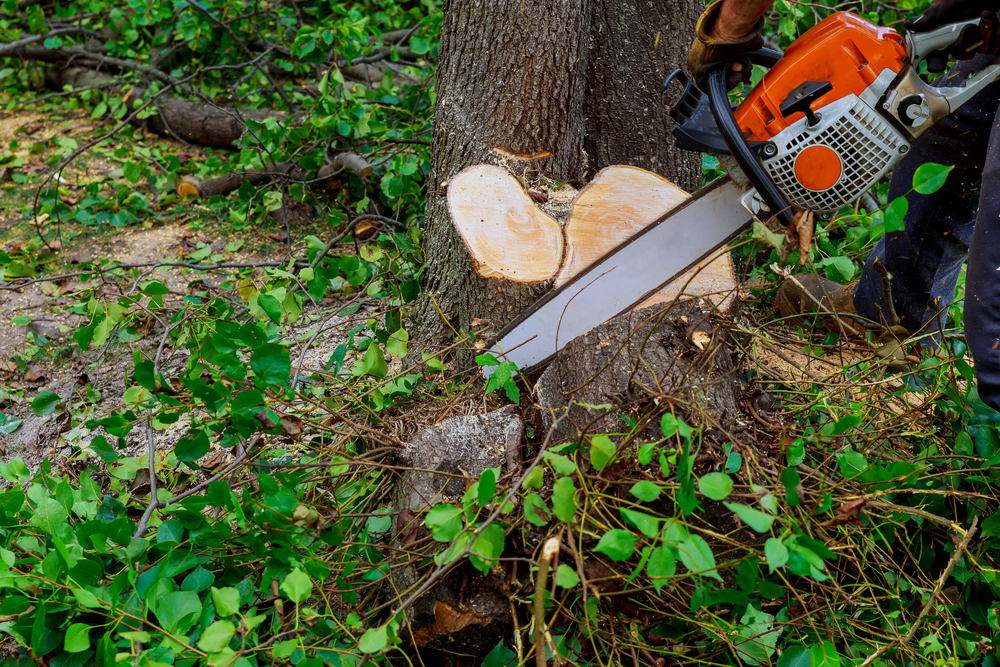
Following safe tree cutting practices means using the proper notch and back cut pattern that has guided arborists since the early 1900s. Rushing cuts without proper notching causes barber chair splits, where trunks split vertically toward whoever runs the saw. Those accidents kill roughly 100 folks yearly across the United States according to OSHA data published through 2025 and 2026, making proper technique non negotiable across DIY removals.
Cutting steps worth following carefully:
- Face notch cut at 70 degrees on intended fall direction side
- Back cut angled slightly above face notch base level
- Hinge wood left intact controlling trunk fall direction precisely
- Wedges driven into back cut preventing kickback against saw blade
- Escape paths cleared at 45 degree angles from fall direction
Homeowners untrained in chainsaw work should hire pros instead of risking serious accidents during complex removals across tight yards.
4. Weather Conditions That Change Everything
Weather impacts tree work way more than most homeowners realize, especially across rainy Pacific Northwest seasons stretching October through June. Wet bark slips chains, soaked soil shifts root plates unpredictably, and wind gusts above 15 mph push trees toward unintended landing spots. Smart folks watch weather forecasts before scheduling DIY removals, picking dry calm windows whenever possible.
Weather factors worth checking before starting:
- Wind speeds below 10 mph reducing unintended fall direction risks
- Soil moisture levels dropped below saturation across clay heavy yards
- Lightning forecasts cleared across full afternoon working windows
- Temperatures above freezing preventing brittle frozen wood snapping
- Visibility above 100 yards spotting potential hazards quickly
Postponing jobs by a single day often prevents serious accidents across tricky removals near homes or fences.
5. Knowing When DIY Stops Making Sense
Plenty of folks believe tree work always saves cash compared to hiring pros, but that math collapses fast once trunk diameter exceeds 12 inches or trees lean dangerously close to structures. Insurance claims following DIY accidents routinely top $40,000 in property damage plus medical costs combined. Some jobs genuinely deserve licensed certified arborists running them, especially across narrow Seattle suburban lots where neighbor properties sit closer than fall zones allow safely.
Jobs requiring pro intervention typically:
- Trees taller than 30 feet with limited landing zones available
- Trunks within 20 feet of homes, garages, or fence lines
- Power lines running within 15 feet of any tree branches
- Hollow or diseased trees showing structural integrity concerns
- Homeowners lacking chainsaw experience beyond basic firewood cuts
A licensed arborist costs $400 to $1,800 per tree, while ER bills following accidents start at $5,000 minimum.
Smart homeowners weigh DIY tree removal carefully against actual risks involved across various jobs. Reading trees properly, wearing proper gear, using correct cutting patterns, watching weather, plus knowing when to hire pros separates folks who finish jobs safely from folks who file insurance claims afterward.
Pacific Northwest conifers carry extra risks thanks to soaked soil plus tall heights wind loading dramatically across stormy seasons. Acting carefully matters way more than acting fast when chainsaws and 40 foot trees are involved together. Folks taking time to prep properly almost always finish without serious incidents.
“Tree removal feeling way over the head? Call us at Cascade Tree Care at (425) 530-9697 for honest assessments before things go sideways out there.”
FAQs
Q1: How much does professional tree removal cost across Seattle, WA, during 2026?
Tree removal across Seattle, WA, typically runs $400 to $1,800 per tree depending on height, trunk diameter, plus landing zone complexity involved. Larger conifers near homes or power lines push costs above $2,500 fairly often, especially when crane assistance gets needed for safe sectional removal.
Q2: When’s the best time of year for tree removal across Seattle, WA, properties?
Late summer through early fall works best across Seattle, WA, since soil firms up and weather stays drier across most weeks. Trees also carry less leaf weight during dormant months, making winter removals easier when needed urgently after windstorm damage.
Q3: Do homeowners across Seattle, WA, need permits for tree removal?
Yes, plenty of trees across Seattle, WA, require removal permits depending on diameter, species, plus property zoning rules currently in place. Heritage trees plus exceptional specimens carry stricter protections, with violations sometimes hitting $5,000 fines under current 2026 city ordinances regulating private tree removal.